Training Hub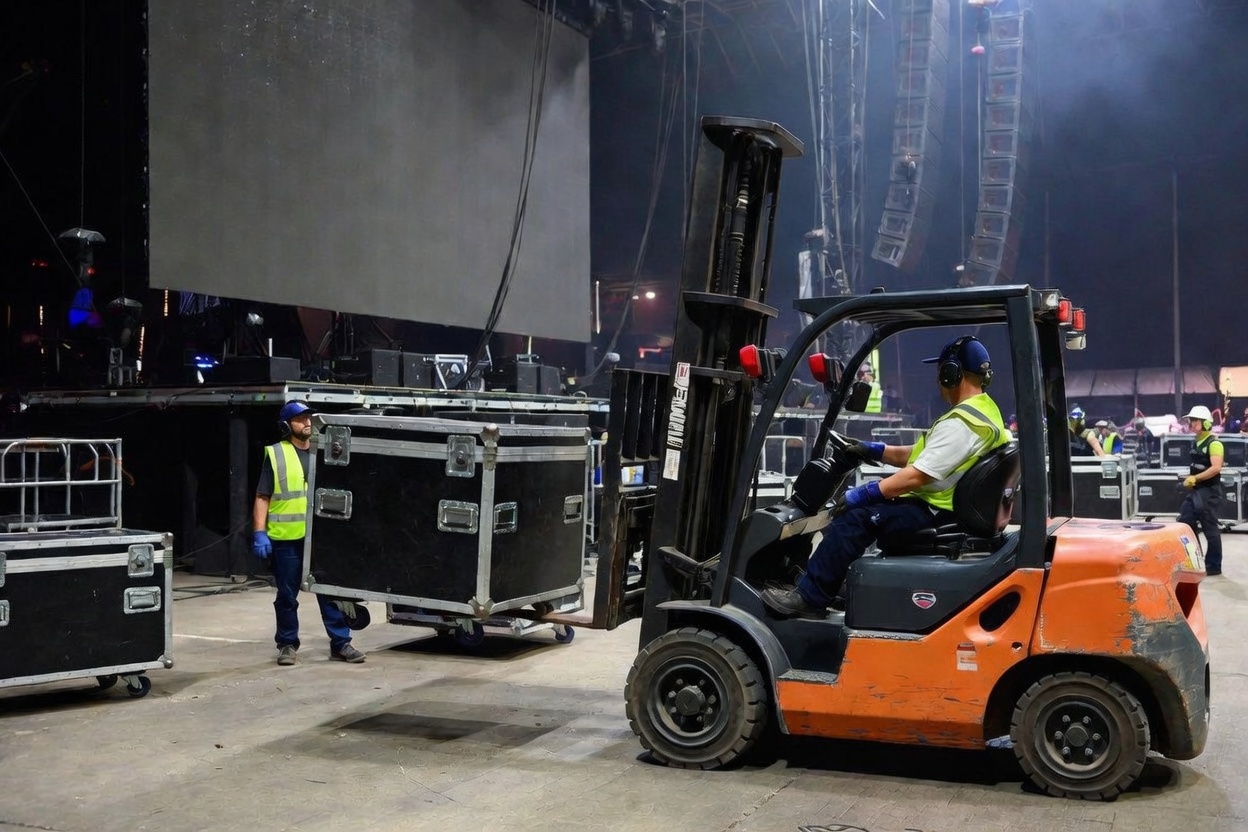
Module 8Not Started
Indoor Arena & Theater Operations
Track A — tight, high-pedestrian, load-limited floors
7 min read 11 scenarios · 80% to pass
Why this matters
Arena floors are high-agility, high-precision, high-pedestrian zones over surfaces that can't always take the weight — ice rinks, subterranean facilities, aging stages. And a fleet of propane lifts can poison the air the crew breathes.
Module briefing
01
The Loading Dock Bottleneck
The dock is the highest-stress choke point of the entire load-in.
- Confirm the dock plate is rated for your machine + load before crossing
- Verify the truck's wheels are chocked and the trailer can't creep
- Watch the dock-plate transition — it vibrates and shifts under repeated crossings
- Manage the cross-docking flow; don't stack up behind another lift on the plate
Hard Rule· Rated plate, chocked truck
Never cross a dock plate you haven't confirmed is rated for the load, onto a trailer whose wheels aren't chocked. The plate failing or the truck rolling is a fatal drop.
02
Floor Load Limits
Arena floors often sit over subterranean sports facilities, ice-rink covers, or aging theater stages. A concentrated machine load can exceed what the surface can bear.
Ask the production manager or venue for the floor's weight rating (e.g., 150 lbs/sq ft) before driving a heavy machine over it. Cross-reference with stage-deck point-loading discipline.
Core Drill· Core Drill — ask the number
Before driving a heavy machine over any questionable surface, get the floor's rated limit in lbs/sq ft. 'It's probably fine' is not a rating.
03
Air Quality & Carbon Monoxide
Propane and diesel lifts poison enclosed air fast.
A fleet of internal-combustion lifts running constantly during a heavy indoor load-in builds toxic carbon-monoxide pockets near crew and performers.
Favor electric (Class 1) lifts indoors where possible. If running propane or diesel, confirm ventilation and watch for CO symptoms — headache, dizziness, nausea.
Hard Rule· Ventilate or switch to electric
Constant combustion lifts in an enclosed arena is a carbon-monoxide hazard. Confirm ventilation, or use electric. Crew symptoms mean stop and clear the air.
04
The Arena Squeeze Drill
The signature indoor challenge: carry a wide, unbalanced load (a lighting cable trunk) backwards through a narrow 'backstage hallway' built of road cases, around a sharp 90° turn, using a spotter — mimicking the frantic post-show arena floor.
Rolling turns only, one spotter on hand signals, constant 3-ft halo awareness.
Tour Reality· Backwards, blind, on a spotter
The real arena floor is exactly this: a wide load, a tight turn, no forward view, and total dependence on one spotter's hands.
Deliberate Practice
Interactive Scenario Trainer
Begin Interactive Scenarios
11 real situations from the floor. Type your decision — the trainer grades it against the named technique and gives you instructor-level feedback. Pass mark: 80%.